Selling at markets and online, all year round
Published on 7 min read The 123Ventes team
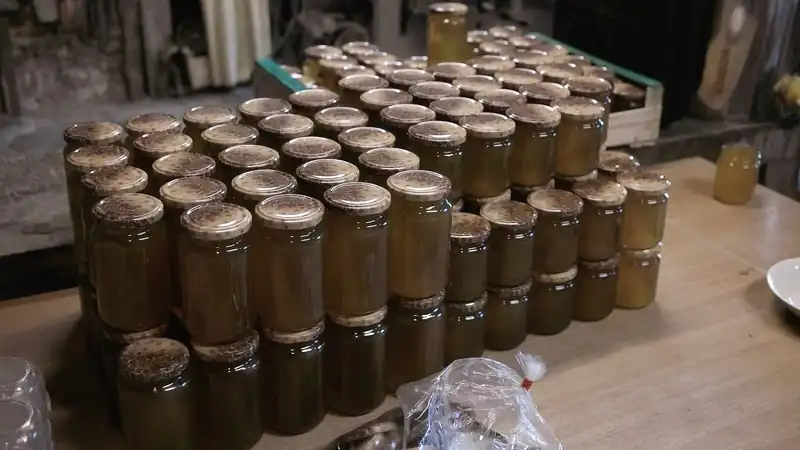
The Sunday craft market, the October craft fair, the Christmas market: for many makers, that is where most of the turnover comes from. You meet customers, watch them handle your pieces, and you sell. Then January comes, the stalls are packed away, and sales go with them.
An online shop does not replace the market. It takes over from it: before, to announce where you will be; during, to stay in touch; after, so that the customer who hesitated at your stall can order the following Tuesday. Here is how to make the two work together.
Market and online shop: two channels that help each other
At the market, customers discover you. They touch, compare and talk to you. But they do not always have the budget that day, the right size, or room in their bag. Without an online shop, that sale is lost: they will remember neither your name nor your stall.
Online, it is the other way round: customers can order at any time, but they do not know you yet. You need photos, descriptions and trust. The market brings exactly that trust: someone who has shaken your hand buys online without hesitating.
| Market, fair | Online shop | |
|---|---|---|
| What it brings | New customers, contact, trust | Sales every day, even while you are in the workshop |
| Its limit | A few days a month, depending on weather and season | You have to get yourself known |
| What the other brings it | The shop keeps customers between two markets | The market sends it customers who already know you |
Before the market: bring your customers to you
A customer who knows where to find you will make the trip. A few days before each date:
- Publish your calendar on your shop’s home page: place, date, opening hours. It is the first thing your regulars will look for.
- Send a newsletter to your customers: “Come and see me on Saturday at the craft market, with my new autumn pieces.”
- Offer ordering with pickup at the stall: switch on in-store pickup and say that the piece can be collected at the market. The customer chooses online, pays, and leaves with the piece without the risk of it being gone. For you, it is a sale secured before the gazebo is even up.
- Announce the date on social media, with a photo of last year’s stall. Our tips for choosing the right network are in social media for makers.
At the stall: sell, take payment, stay in touch
Your stall is your best shop window. It is also the only moment when you can ask customers to stay in touch.
- A card in every bag, with your shop’s address. Add a QR code that leads to it: any free generator will make one in a minute.
- A clearly visible sign: “All my creations at www.your-shop.com”. Customers who do not buy today take a photo of it.
- A newsletter sign-up list, on paper or on a tablet, with a tick box. Only write down people who have agreed: that is the rule, and they are the only ones who will read your messages anyway.
- Accept card payments. A small terminal linked to your phone is enough, and many customers no longer carry cash.
- Take orders on the spot for a size, a colour or a made-to-order piece: the customer orders it from the shop on their phone, and you ship it or they come and collect it.
Keep a notebook of the questions you are asked most often at the stall. Each one is a sentence to add to your product pages: they are exactly the questions your online customers ask themselves.
One stock for the stall and the shop
It is the fear of everyone who sells in two places: selling the last piece at the market while a customer orders it online. For a one-off piece, that means a refund and an apology.
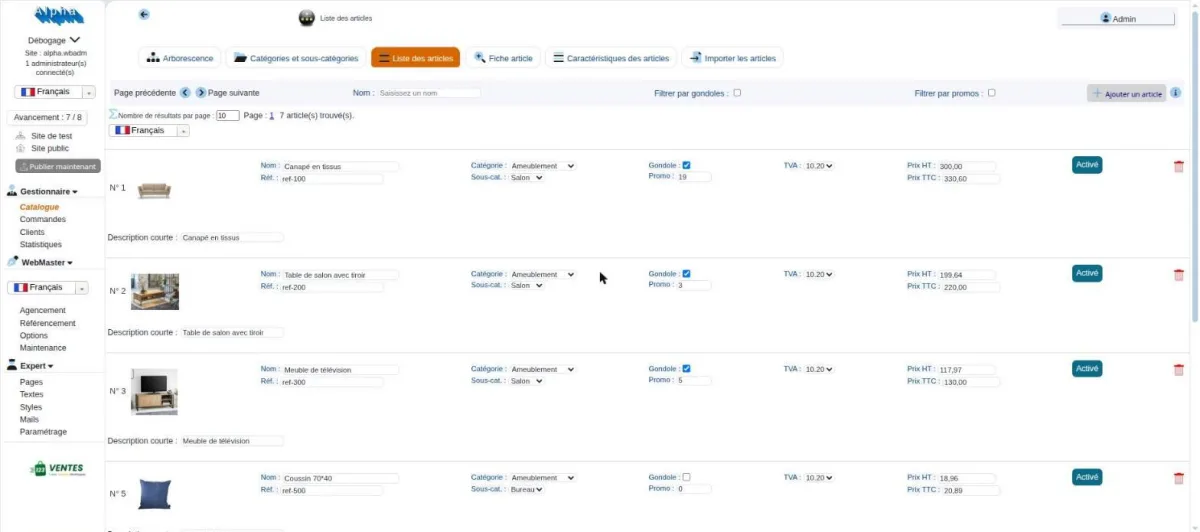
The solution is to record stall sales in the same tool as the shop. With 123Ventes, the till in your back office shows your products as tiles, sorted by category: you build the receipt, choose the payment method, and the till works out the change. The sale becomes an order, with its invoice, and the stock is the same as your online shop’s: a piece sold at the market can no longer be ordered online.
In the evening, the till closing gives a summary by payment method and helps you count notes and coins. Card payments still go through your own terminal: the till records the sale, it does not replace the device.
Online shop, till for your markets and shared stock: €29.90 a month, no commission, and nothing to pay before your first order.
After the market: turn a meeting into an order
On the Monday after a market, your visitors still remember you. It is the right moment:
- Put online the pieces people liked and those you did not have at the stall, with real photos. Our guide to photographing your creations with a smartphone saves you a studio.
- Write to your stall list: a thank you, two or three photos, the link to the shop. No need for more.
- Follow up with those who hesitated with a small treat for market visitors, such as free delivery for a week.
- Look at what sold where: some pieces go at the stall, others online. It is valuable for preparing the next market.
A maker’s year, month by month
Markets follow the seasons; the shop stays open. Here is how to spread them over the year:
| Period | Markets and fairs | Online shop |
|---|---|---|
| January to March | Few dates, often indoors | Time to redo photos, write product pages, prepare Valentine’s Day |
| April to June | Open-air craft markets are back | Mother’s Day: announce it early, with a last order date |
| July and August | Summer markets and passing tourists | Tourists go home: the card in the bag does the rest |
| September and October | Craft fairs and open studio days | Prepare your end-of-year collection and photos |
| November and December | Christmas markets, the busiest period | Gifts are ordered online: show the last shipping date before Christmas |
A month without markets is not a month without sales: it is when your online shop and your newsletter work for you.
The formalities not to forget (in France)
- The itinerant trader card (carte de commerçant ambulant): it is compulsory as soon as you sell outside the town where you or your business are registered. It costs €30, is valid for four years, and is requested from your chamber of trades or chamber of commerce. Check the conditions with them before your first market.
- Your pitch: on a town market, ask the town hall or the market manager, in return for a pitch fee; at a fair or craft market, ask the organiser, often several months in advance.
- Insurance: check that your professional liability insurance covers selling from a stall.
- Prices displayed on each piece or on a clearly visible label, as in a shop.
For online sales, the rules are slightly different: terms of sale, right of withdrawal, mandatory information. Everything is explained in selling your creations online: what the law says.
Frequently asked questions
Do you need an online shop if you already sell at markets?
It is not compulsory, but it is what lets you sell between two markets. The customer who hesitated at your stall can order later, and your regulars know where to find you. The two channels reinforce each other: the market brings trust, the shop brings everyday sales.
How do you avoid selling the same piece twice, at the market and online?
Record your stall sales in the same tool as your shop. With the 123Ventes till, the stock is shared: a piece sold at the market can no longer be ordered online.
How do you collect the contact details of market visitors?
Slip a card with your shop’s address into every bag, display a QR code on the stall, and offer a newsletter sign-up list. Only add people who have agreed.
Do you need an itinerant trader card to sell at a market in France?
Yes, as soon as you sell outside the town where you or your business are registered. It costs €30, is valid for four years and is requested from your chamber of trades or chamber of commerce.
What can you sell online in winter, when there are no markets?
Your whole catalogue, with a special effort for the holidays: Valentine’s Day, then Mother’s Day. Use these quieter months to redo your photos, write your product pages and send a newsletter to your market customers.
Conclusion
Markets and your online shop do not compete: one makes you known, the other brings people back. Announce your dates online, send stall visitors to your shop, keep a single stock, and months without markets stop being months without sales.
To go further, see all the possible channels in selling your creations online, how to price your creations, and the online shop for makers.
👉 Try 123Ventes for free: €29.90 a month, no commission on your sales.