Online shop for beekeepers: selling your honey and hive products
You visit your hives, you extract, you fill the jars. Then you have to sell: at the market, at the honey house, to friends of friends. And in winter, when markets are few and far between, the jars wait on the shelves. An online shop sells your harvest all year round, including to customers who tasted your lavender honey on holiday and live 800 km away.
123Ventes is an online shop designed for craftspeople and producers who would rather be at the apiary than at the computer. Here is how an online shop answers the questions that come with being a beekeeper.
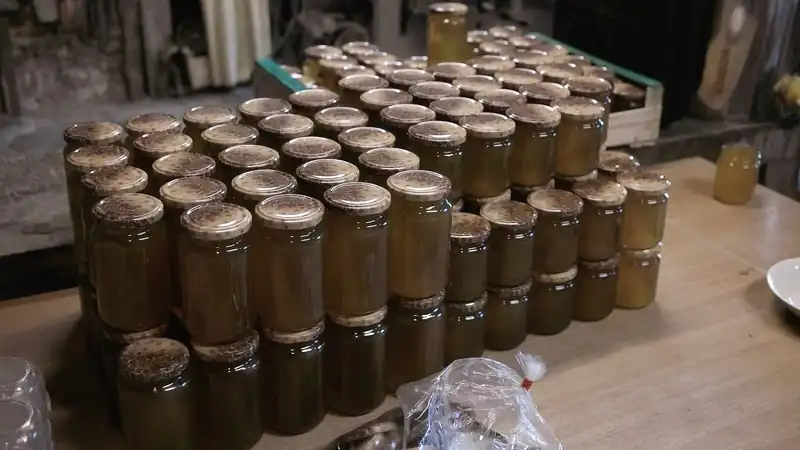
How should I present my honeys and my other products?
Sort your products by category and subcategory: single-variety honeys (acacia, chestnut, lavender, lime blossom, fir, wildflower…), hive products (pollen, propolis, royal jelly, wax), treats (gingerbread, nougat, honey sweets), gifts and gift sets. The customer looking for a mild honey for their tea finds it without scrolling past the propolis.
The same honey in 250 g, 500 g and 1 kg jars? A single product page is enough: you offer the sizes as options, each with its own price. Tasting sets become separate products, easy to give as gifts. Everything is set up from catalogue management.
How do I manage stock that depends on the harvest?
Your chestnut honey only exists in limited quantities, and when it has gone, you have to wait until next year. In 123Ventes, you enter the real stock of each honey: when the last jar is sold, it can no longer be ordered. Nobody pays for a jar that doesn’t exist.
You can leave the product page online with the note “new harvest in July”: your customers know when to come back. And on the day the new harvest is in jars, a newsletter to your customers sends off the first boxes.
What should I put on a honey’s product page to make people want it?
Honey is chosen by taste, and online you can’t taste. Your text has to do it for the customer: the colour, the texture (runny, creamy, set), the taste (mild, strong, slightly bitter), the suggested use (tea, cheese, baking), and where your hives are. “Chestnut honey harvested in the Cévennes, strong and slightly bitter, perfect with goat’s cheese” sells better than “chestnut honey”.
Also explain crystallisation: it is the first thing customers worry about, even though it is a natural sign. One sentence on the product page saves a lot of messages.
For photos, show the jar against the light for the colour, a spoon with honey running off it or the creamy honey, and your hives in their landscape. Take your photos in daylight, and watch out for reflections on the glass.
What rules apply to selling honey online?
Honey is a food product: online, the customer must have the essential information before paying, as if they were holding the jar. Broadly speaking: the name (“honey”, or the name of the flower for a single-variety honey), the net quantity, the country of harvest, and your details. Copy this information into the long description of each product page and add a sharp photo of the label.
- Your hives must be declared every year, from the very first hive, to the French Ministry of Agriculture.
- Propolis, royal jelly, pollen: be careful with health promises. Claims such as “boosts your defences” are strictly regulated; describe the product and how to use it, without promising to cure anything.
- Beeswax candles and cosmetics: they have their own rules, see our pages for handmade candles and soap makers.
Because honey has a best-before date, the 14-day right of withdrawal under French consumer law applies in principle to online sales: say so in your terms of sale. For your status and your formalities, your chamber of agriculture (chambre d’agriculture) and the consumer protection office of your département (direction de la protection des populations) can advise you.
How do I send jars of honey without breakage?
Honey travels well; it is the glass that is fragile, and heavy. A few simple rules:
- Protect each jar separately, lid screwed on tight, and wedge them in a rigid box: nothing should move when you shake the parcel. A jar broken in a box stays sticky for a long time.
- Weigh the parcel ready to go: six 1 kg jars quickly make a heavy parcel. Your shipping costs are then worked out automatically, by weight band and by zone.
- Offer free delivery above a set amount: customers happily add one more jar to reach it.
The carriers are described on the delivery options page.
Can my customers collect their honey from the honey house?
Yes, with collection on site: the customer orders and pays online, then comes by the honey house or your market stall. No box, no carrier, and it is a chance to let them taste this year’s honey. For customers nearby, you can also offer your own local delivery, for example one round a month.
If you also sell at markets, the 123Ventes till records stall sales with the same stock as the online shop: you don’t sell online the last jar of acacia honey that went that morning.
Can I offer hive sponsorship or apiary visits?
Many beekeepers offer people the chance to sponsor a hive: the sponsor receives a share of the harvest, news from the apiary, sometimes a visit. Companies like the idea too. Each package can become an item in your shop, with its price and what it includes.
Apiary visits and beginners’ workshops can also be sold online, with the date, the length and the number of places in stock. Participants pay when they sign up.
How do I keep my customers coming back from one harvest to the next?
A customer who liked your honey will buy it again. The 123Ventes customer file keeps their orders, and the included newsletters announce the new harvest, the return of the fir honey or the Christmas gift sets. Promotion rules reward loyal customers: free delivery, a discount after several orders, a small free tasting jar.
When pricing your jars and gift sets, remember to include packaging and time.
How much does a 123Ventes shop cost for a beekeeper?
The subscription costs 29.90 € a month or 319.90 € a year, with hosting and the security certificate included. 123Ventes takes no commission on your sales: only your payment provider’s fees apply, about 1 € on a 50 € order paid by card. If you would rather not do anything yourself, the turnkey set-up costs 400 €. The details are on the pricing page.
Can my visitors book a visit to the apiary?
Yes. A visit to the apiary in a bee suit, an extraction demonstration, a tasting at the honey house: each one becomes a date to book, with as many places as you have bee suits. Your visitors book and pay online, and they often leave with a jar. See the online booking page.
Trades with needs close to yours
Does your business overlap with other trades? See also how to open a delicatessen online, sell handmade candles online and take chocolate orders before the holidays. And before choosing, read what an online shop really costs.
Your questions
Does 123Ventes take a commission on the honey I sell?
No. 123Ventes costs a fixed subscription of 29.90 € a month, whatever your turnover, even after a very good harvest. Only your payment provider’s fees apply, just like with your card terminal at the market.
Do I need special permission to sell honey online?
The rules are the same as at the market: the annual declaration of your hives, hygiene, labelling with the country of harvest. Online, you must also give this information on the product page before the purchase. If in doubt, check with your chamber of agriculture (chambre d’agriculture).
What do I do with a honey whose harvest has sold out?
Enter the real stock: when the last jar is sold, the honey can no longer be ordered. Leave the product page online with the date of the next harvest, and let your customers know by newsletter when it arrives.
Can honey be shipped to a pick-up point?
Yes, for a few well-padded jars. For heavy parcels, tracked home delivery is safer. And for customers nearby, collection from the honey house is still the simplest option.
How long does it take to put my honeys online?
The shop is created in a minute. After that, allow about ten minutes per product, photos and label included. Start with this year’s honeys, and add the hive products afterwards.
Create my shop