Etsy or your own online shop: which should a maker choose?
Published on , updated on 7 min read The 123Ventes team
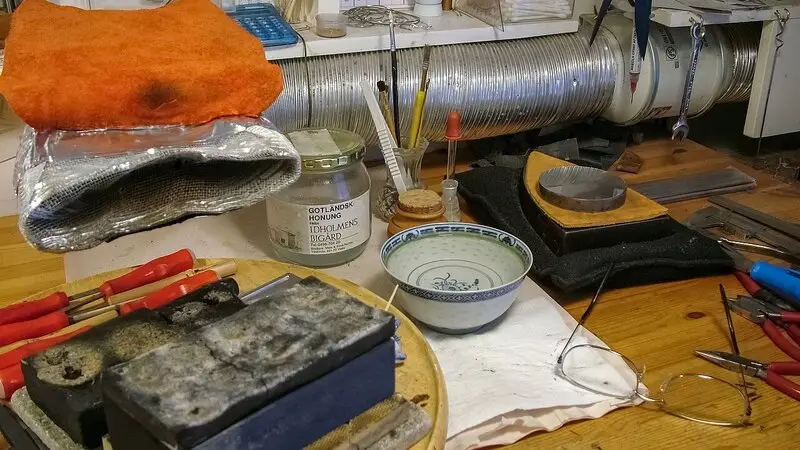
You make jewellery, ceramics, soaps or bags, and you want to sell them online. You have two options: open a shop on Etsy, or create your own online shop. You often read that you have to pick one over the other. In reality, the makers who do best often use both, each for what it does best.
Here’s how to decide, with figures to back it up, depending on your situation.
Etsy and an online shop: two different tools
Etsy is a marketplace: a huge shopping arcade where thousands of sellers each have their own stall. Visitors come for Etsy, wander from stall to stall and buy from whichever one catches their eye.
Your own online shop is your workshop with its own shopfront on the high street: your name, your colours, your rules. Nobody puts you next to a competitor, but nobody walks past by chance either: it’s up to you to bring the visitors in.
The whole decision boils down to this difference: Etsy brings you visitors, your shop brings you customers who stay yours.
What an Etsy sale costs
Opening an Etsy shop costs next to nothing. It’s on every sale that the money goes. For a seller based in France, a €50 order, shipping included, costs roughly:
- €3.25 in transaction fees (6.5% of the total, shipping included);
- €2.30 in payment processing fees (4% + €0.30);
- €0.57 in regulatory operating fees (1.14%);
- $0.20 to relist the item.
That’s around €6.30 per order, nearly 13%, not counting Offsite Ads, which become compulsory above $10,000 in sales a year and then take 12% of the sales they generate.
In your own shop, the same order paid by card costs around €1 in bank fees, and nothing else. The breakdown over a full year is in our comparison an alternative to Etsy for makers.
When Etsy is the right choice
Etsy has real strengths, and it would be a shame to miss out on them in these cases:
- You’re just starting out and nobody knows you yet: Etsy brings you your first buyers without you having to go looking for them.
- You want to test a product before committing: a few listings, and you quickly see what people like.
- You’re targeting buyers abroad: Etsy is well known in the United States, Germany and the United Kingdom, and it translates your listings.
- You sell only a little, a few pieces a month: a fixed subscription wouldn’t pay for itself yet.
When your own shop is the better choice
Your own shop takes the lead as soon as your customers come for you, not for Etsy:
- You already have customers: at markets, craft fairs, your workshop, on Instagram. They look you up by name; there’s no reason for them to go through a platform that takes 13%.
- Your customers come back: soaps, cosmetics, fine food, candles… In your own shop, the customer list is yours, and you can email them to announce a new collection.
- You want to build a brand: your own domain name, your own layout, your own photos, without a competitor’s items right next door.
- You sell locally: collection from your workshop or delivery in your town are easier to organise in your own shop. See our tips for selling locally online.
- You’re tired of rule changes: on Etsy, fees and the algorithm change without anyone asking your opinion. In France, the regulatory operating fee rose from 0.47% to 1.14% on 22 June 2026.
How many sales before your own shop pays off?
Let’s keep the maths simple. On a €50 order, your own shop saves you around €5.30 compared with Etsy (€6.30 in fees on one side, €1 on the other). A 123Ventes shop costs €319.90 a year.
€319.90 ÷ €5.30 = about 60 orders a year. In other words, from around 5 orders of €50 a month placed through your own shop, the subscription has paid for itself; every order after that earns you €5.30 more than on Etsy.
And to make sure your price really covers your materials, your time and these fees, read how to price your handmade creations.
Bear in mind that this calculation only counts the orders you bring to your shop yourself. That’s why the best strategy is rarely to close your Etsy shop overnight.
The right strategy: Etsy to be found, your own shop to build loyalty
Rather than choosing, split the roles:
- Etsy is there to get you discovered by strangers searching for “stoneware mug” or “handmade silver ring”.
- Your shop handles everything else: customers who already know you, repeat buyers, people from the market and social media.
To move your customers from one to the other, use everything that belongs to you: a card with your shop’s address in every parcel, a label on your products, your market stall, your Instagram profile, your Google Business Profile. On Etsy itself, in listings and messages, the rules forbid inviting buyers to order elsewhere: respect them, your other channels are enough.
Little by little, the share of your commission-free sales grows, and Etsy goes back to doing what it does best: a shop window for getting discovered. To bring people to your shop, read how to attract customers to your website.
Opening your own shop alongside Etsy in 5 steps
- Choose your domain name, ideally the name of your workshop: that’s what your customers will remember.
- Bring over your products: Etsy lets you download your listings as a file, which you can import into your shop instead of retyping everything.
- Take care of your “workshop” page: your story, your hands, your tools. That’s what sets you apart from a marketplace.
- Set up payment and delivery: bank card, PayPal, Colissimo (the French postal parcel service), Mondial Relay, collection from your workshop.
- Let your customers know: markets, social media, cards in your parcels. Your first orders will come from them.
The guide online shop for makers covers each step in detail, from catalogue to shipping. And to see the specifics of your craft: jewellery maker, potter and ceramicist, soap maker, dressmaker, leatherworker or woodworker.
What about 123Ventes?
123Ventes is a French online shop solution designed for makers: €29.90 a month or €319.90 a year, with no commission on your sales, with unlimited products, card and PayPal payments, delivery and collection from your workshop, sizes, colours and options for personalised pieces, and your own domain name. Support is in French, by email and by phone.
No time to set it all up? We can build the shop and enter your products for you: that’s our turnkey shop creation service.
Frequently asked questions
Is it better to sell on Etsy or on your own website?
To get started and get known, Etsy is handy. As soon as you have customers who come back or know you by name, your own shop is more profitable: no commission, and the customers stay yours. The most effective approach is often to keep both.
How much does Etsy take on a €50 sale?
For a seller based in France, around €6.30: 6.5% transaction fee, 4% + €0.30 payment processing fee, 1.14% regulatory operating fee and $0.20 listing fee. That’s nearly 13%, excluding Offsite Ads.
Can you sell the same product on Etsy and in your own shop?
Yes, nothing prevents it. Just keep track of your stock so you don’t sell a one-off piece twice: remove the listing on one side as soon as it sells on the other.
Can you put your shop’s address in your Etsy parcels?
A business card or a note in the parcel is common practice. However, in listings and Etsy messages, the rules forbid inviting buyers to order elsewhere.
Will my shop get visitors without Etsy?
Not automatically: it’s up to you to bring them in, through your existing customers, your social media, your Google Business Profile and search engine optimisation. In return, every sale belongs entirely to you.
Conclusion
Etsy or your own shop? To get discovered, Etsy. To keep your customers and your margin, your own shop. And for most makers, both: Etsy as a shop window in the arcade, your own shop as a workshop in your name, where every loyal customer orders commission-free.
👉 Try 123Ventes for free: set up your shop with no time limit, and only pay when you receive your first order.