Why isn’t my website selling? 9 common reasons and how to fix them
Published on , updated on 5 min read The 123Ventes team
You spent your evenings building your online shop. The photos look good, the products are there, the “Add to basket” button works. And yet, nothing. Not a single order, or so few that you wonder whether it was your cousin.
Don’t worry: this is very common, and it is rarely a lost cause. Most of the time, the problem comes down to a few specific points. Here is how to find which one, and how to fix it.
First, the right diagnosis: is nobody coming, or is nobody buying?
Before changing everything, open your statistics. They will tell you which situation you are in:
- very few visits: your shop is invisible. The problem is not the shop yet, it is the way to get there (reason 1);
- visits, but no purchases: people come, look around and leave. Something on the site is putting them off (reasons 2 to 7);
- baskets filled and then abandoned: the customer was ready, but a surprise scared them off at the last moment, often the delivery cost (reason 5);
- sales, but never the same customer twice: follow-up is missing (reason 9).
A doctor does not prescribe before examining. It is the same for a shop.
1. Nobody knows your shop exists
An online shop is like a shop in a street nobody walks down until someone shows them the way. Google takes time to discover a new website, sometimes several months. In the meantime, you need to bring visitors in yourself:
- tell your existing customers about it, at the till, on your bags, on your business cards;
- post on your social media with a direct link to your products;
- create your Google Business Profile if you have premises;
- ask for a link from websites that know you: partners, suppliers, the tourist office, your local traders’ association.
If you have a physical shop, our guide to selling locally online will give you more ideas. And to go further, see how to attract customers online.
2. People cannot tell what you sell within five seconds
Visitors decide very quickly whether to stay or leave. When they land on your home page, they must understand immediately who you are, what you sell and why they should buy from you. A lovely mood photo with no text looks nice, but “Handmade ceramics from Vallauris, delivered all over France” is much clearer.
3. The photos are not appealing
Online, customers cannot touch. The photo does all the work. No need for a studio: a window, daylight, a plain background and a recent phone are enough. Show the product from several angles, in use, and next to an everyday object so people can guess its size. A cup photographed on its own could be 5 cm or 50 cm tall.
4. The descriptions are empty or copied
“Ceramic bowl. €15.” The customer has questions: is it dishwasher-safe? Microwave-safe? How much does it hold? Every unanswered question is a good reason not to buy. Write a different description for each product, using the words your customers use. Avoid copying the supplier’s text: Google already finds it on a hundred other websites, and it will not rank you above them.
5. The customer discovers the shipping costs at the last moment
This is the number one cause of basket abandonment. The customer has made their choice, they are happy, and at checkout the delivery adds €9 to a €15 item. They close the tab. To avoid this:
- show the delivery costs on the product page, or on a page that is easy to find;
- offer a cheap option, such as a parcel pickup point;
- if you have premises, offer free in-store pickup;
- consider free delivery above a certain amount: it also encourages people to add another item.
6. Visitors do not trust you
Buying from a stranger online takes a little courage. Help your customers feel safe:
- an “About us” page with your photo, your workshop, your story;
- an address, a phone number, an email address that gets answered;
- complete terms and conditions of sale and legal notices;
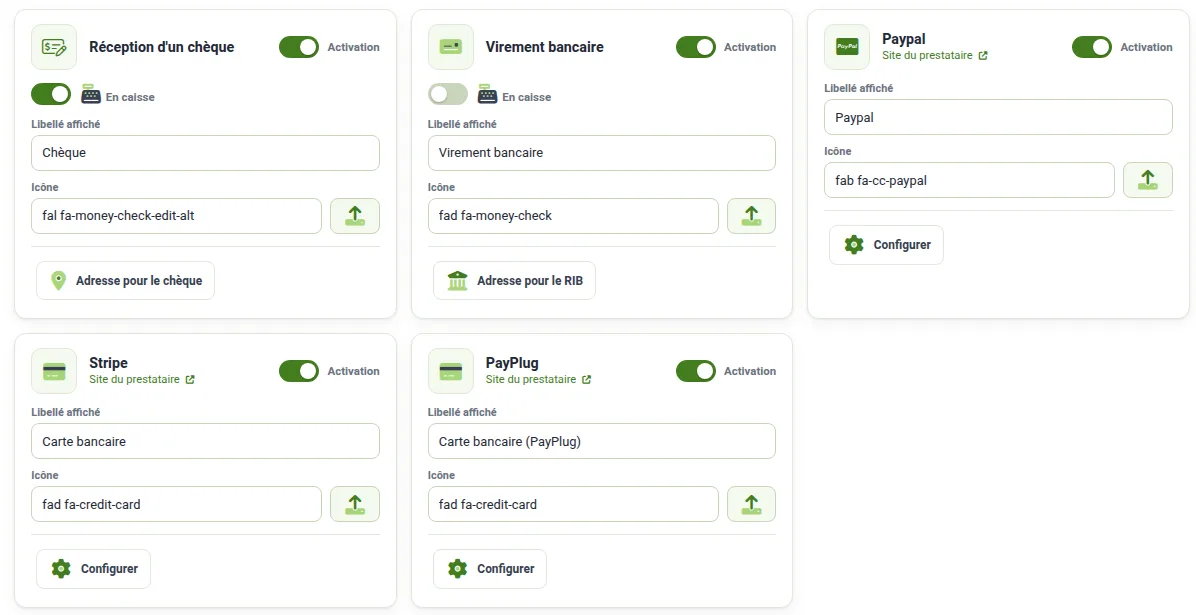
- well-known payment methods: bank card, PayPal;
- reviews from real customers.
A website without a face is a bit like a shop with tinted windows. People hesitate to go in.
7. Ordering is too complicated
Try it yourself, on your phone: how many steps are there between the product and the order confirmation? Every unnecessary form, every slow-loading page, every badly placed button loses you customers. And do not forget that most of your visitors arrive on a phone, often with one thumb and little patience.
8. The price is not explained
Your products are handmade, they cost more than in a supermarket, and that is normal. But you have to say so! Explain the time spent, where the materials come from, how it is made. A customer who understands why a bowl costs €35 buys it gladly. One who does not goes elsewhere.
9. You never follow up with your customers
The easiest customer to win over is the one who has already bought from you. A newsletter now and then (new products, Mother’s Day, the sales), a little note slipped into the parcel, regular posts on social media: all of this brings people back. Without follow-up, every sale starts again from scratch.
What if it is the tool?
Sometimes the problem is not you, it is the time your website costs you. If every change takes you a whole evening, you end up changing nothing, and the shop falls asleep.
123Ventes was designed for exactly this: a shop that comes fully equipped (payments, delivery, in-store pickup, statistics, newsletter), for €29.90 a month or €319.90 a year, with no commission. And if you would like an outside view, we offer support and training (€50 an hour) to go through the points on this list together, on your own shop.
To compare with what you pay today, see our guide to the cost of an online shop.
Conclusion
A website that does not sell rarely has a bad product. More often, the path between the customer and your “Pay” button is too long. Look at your statistics, pick the reason that sounds most like you, and fix it first. Then the next one. An online shop improves like a shop window: a little bit every week.
👉 Try 123Ventes for free and see what your shop could look like.